The Criterion Hotel
3 Tyne Street
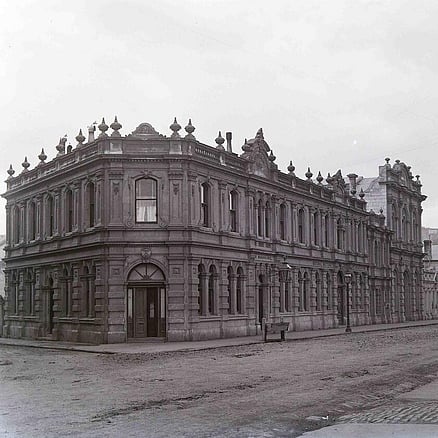
Completed in 1877, Oamaru’s Criterion Hotel stands as one of the town’s most striking nineteenth-century buildings, designed in an ornate Italianate style by the architectural partnership of Forrester and Lemon. Prominently positioned on the corner of Tyne and Harbour Streets, it reflects both the confidence and prosperity of Oamaru during its boom years. The site itself has an earlier history, having been used for A & P shows prior to the construction of the hotel, linking it to the district’s agricultural past.
Commissioned by William Gillespie, the hotel quickly drew admiration. Contemporary reports described it as one of the most decorative additions to the town’s streetscape. Its construction utilised locally quarried Oamaru stone from Cave Valley, a limestone prized not only for its durability but also for its distinctive marble-like veining, which enhances the building’s refined appearance.
The structure was designed to impress. Its dual street frontages, extending nearly 30 metres along Tyne Street and over 27 metres along Harbour Street, created a commanding corner presence. Architectural detailing was rich and deliberate: the ground floor featured rusticated pilasters separating a series of arched windows and entrances, while the upper level echoed this arrangement with more elaborate ornamentation, including carved capitals and decorative motifs.
Window surrounds were finely detailed with keystones, scrollwork and Prince of Wales Feathers, and the roofline was finished with a balustraded parapet. At its centre, a decorative panel displayed the hotel’s name, framed by ornamental shields and scrolls.
Inside, the building was equally impressive in scale and integrity. High ceilings and generously proportioned rooms contributed to an atmosphere of light and space. The ground floor accommodated public and private areas including bars, parlours, and a dining room, while the upper level provided a mix of bedrooms and sitting rooms accessed via a staircase crafted from white pine. Notably, the interior has undergone remarkably little alteration since its construction, making the Criterion widely regarded as one of New Zealand’s most historically important nineteenth-century hotels due to the survival of its original layout and features.
The hotel was built alongside the neighbouring premises of Connell and Clowes, whose offices and store were visually incorporated into the overall façade (the facades are similar but different). Despite this unified appearance, the ground floor remained separate from the hotel’s operations, as indicated by their own distinct entrance. Additional rooms above these premises increased the total accommodation to nearly thirty rooms, although in later years many of these upper spaces fell out of use.
While primarily a place of hospitality, the Criterion also served more somber community functions in its early history. At times it was used as a temporary morgue and as a venue for inquests, reflecting the practical realities of life in a developing colonial town. Through these roles, the building became associated not only with social gatherings but also with moments of loss and local tragedy.
Ownership of the Criterion changed hands several times during its early decades, reflecting the shifting nature of hotel keeping in the period. Following the introduction of Prohibition in Oamaru in 1906, the building adapted by operating as a Temperance Hotel. During this period, it became particularly well known for the quality of its cooking. Local accounts recall the use of egg whites supplied by Lane’s Emulsion factory, located across the street, contributing to its reputation for well-prepared meals. In the late 1930s, the front public bar briefly took on a new role as a soft drink parlour, reflecting changing social habits of the time.
By the early twentieth century, however, the building’s condition had begun to decline. A new chapter began in the 1940s when the property was acquired by the Gillies Foundry and Engineering Company. For several decades it functioned as a pattern storage facility, a utilitarian role that continued until the late twentieth century.
The building’s preservation owes much to the efforts of the Oamaru Whitestone Civic Trust,
Tenant:




The Criterion Hotel and the Civic Trust
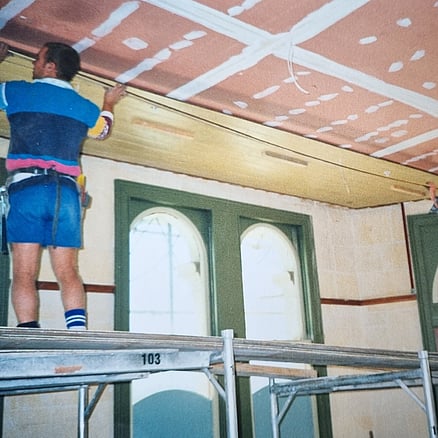
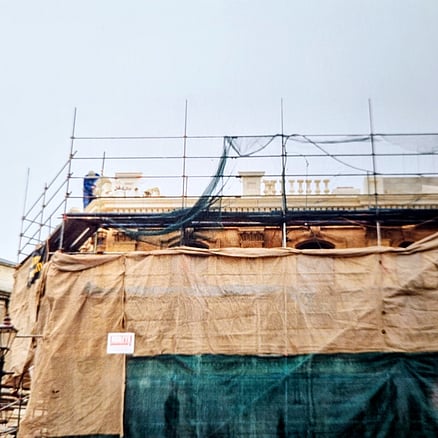
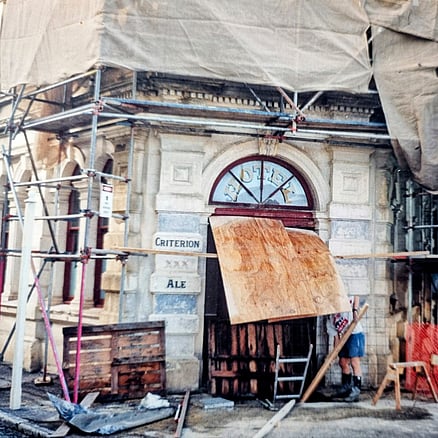
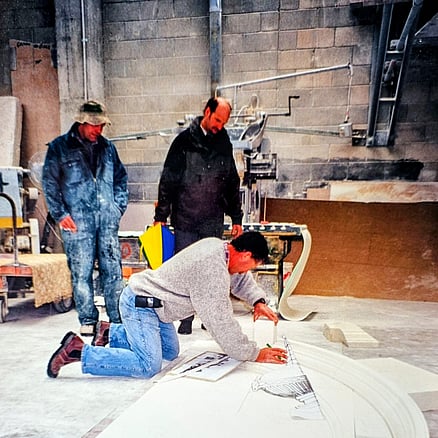
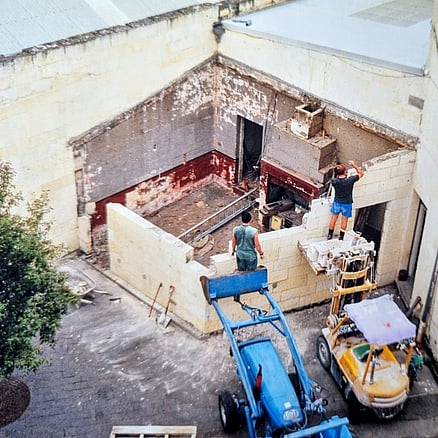
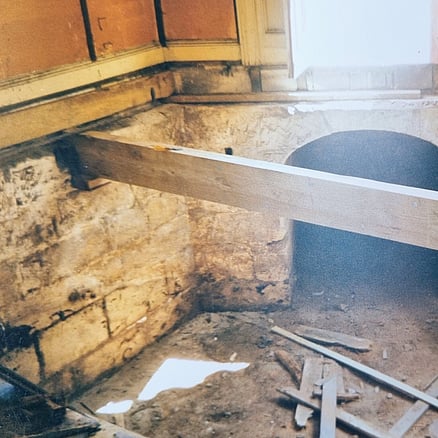
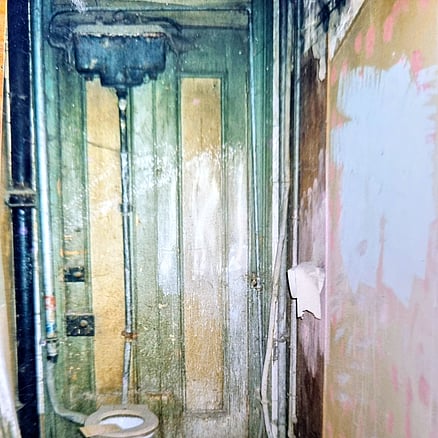
The Whitestone Civic Trust acquired the Hotel from Gillies Foundry in the early 1990s through a negotiated exchange that included Brown’s Store on Tyne Street as well as a cash settlement. Following acquisition, the Trust carried out a major restoration programme, carefully reinstating the parapet and façade to their original design. The interior was also extensively rebuilt to comply with modern fire and earthquake safety standards, while still respecting and retaining the building’s historic character. In 2022, the Trust, working in partnership with the tenant, completed a further upgrade of the ground floor, which included the installation of a new purpose-built commercial kitchen, with the project costing in excess of $700,000 at the time.
Memories of the Criterion
1930's
Ōamaru Mail 22/8/1996
Recently, Oamaru resident Ruth Kinzett contacted the Oamaru Whitestone Civic Trust to relate her experiences working as a waitress and housemaid at the Criterion Boarding House in the 1930s. Staff writer Alison Rudd spoke to her and discovered that personal memories are an important part of the hotel's future conservation plans.
Hard work from dawn to dusk for the princely sum of seven shillings and sixpence a week. That was what Ruth Kinzett of Oamaru remembered most about her years as a housemaid and waitress at the Criterion Boarding House.
The Criterion had been a boarding house before Mrs. Kinzett, then Miss Davies, was employed in the mid-1930s. Like other Oamaru drinking establishments, the hotel had to make its money from diners rather than drinkers after the town went dry in November 1905 and the sale of alcohol was prohibited.
By the mid-1930s, it was owned by Jean Milne, a woman Mrs. Kinzett remembered as small and very energetic, always dressed in an old-fashioned long black dress. With help from Mrs. Kinzett and other women, Mrs. Milne cooked, cleaned, and washed for about 12 gentleman lodgers, most of them permanent residents.
"She was up at 6 a.m., long before me, and worked all day long. In the evening, she used to sew dresses and earn a few extra bob. She did not usually go to bed before midnight."
The boarding house had almost exactly the same layout as it has today. What is now the bar area was Mrs. Milne's private bed-sitting room, and beside it, a tiny room, 8 foot by 8 foot, was Mrs. Kinzett's room. That room has since been incorporated into the bar. The bedroom was big enough for a single bed, a bedside table, and a wardrobe, with, surprisingly, a large fireplace with a carved mantel, although there was hardly room to swing a cat.
The Criterion's main doors were blocked off, and guests and staff used the Tyne Street entrance. To the left were the staff quarters, and to the right the business end of the boarding house – the smoking room, dining room, and kitchen.
Mrs. Kinzett, now 79, recalled the large smoking room as the place where most of the guests gathered in the evening.
"There was lino on the floor, covered with mats. There was a table where the men used to play cards and a billiards table, and either a gramophone or radio."
Behind that was the dining room, where the men ate three hearty meals a day. Behind that again was the kitchen, with its huge coal range fired with coal and wood.
At the rear of the kitchen was the yard, which housed the copper. Once a week Mrs. Milne, Mrs. Kinzett, and the other helpers washed numerous sheets, towels, and other linen for both guests and staff.
"The washing line was across the road behind the Lane's Emulsion factory. There was a large gate, and we went through it to a grass area between Lane's and the railway line. It's funny, I don't remember the washing getting dirty from the trains."
Food and its cooking and serving occupied a large part of Mrs. Kinzett's day. Mrs. Milne cooked breakfast – chops and eggs, bacon and eggs, and liberal amounts of toast and tea – while Mrs. Kinzett waited tables, cleared away dishes, and helped with the washing up.
Dinner was in the middle of the day and consisted of hearty fare such as roast and vegetables, followed by steamed puddings.
"Steamed puddings were Mrs. Milne's specialty. She cooked one every day. Once we had a man staying with us for a few days who loved his steamed pudding. After he had been there a few days, Mrs. Milne asked how he was enjoying his food. He replied that the steamed pudding was great, and at the same time stretched his hands above his head. We just dissolved into laughter when the top button popped off his trousers."
Another regular item on the Criterion's menu was pavlova. One of the ingredients of the famous Lane's Emulsion tonic, along with creosote and proof brandy, was egg yolks, and the Criterion acquired the whites that Lane's did not use.
"We bought them regularly and got our batches of egg whites. We called it cracking day. We set to then and made several pavlovas in the coal range."
The guests were, in the main, respectable gentlemen, bachelors who worked in Oamaru shops and businesses.
Mrs. Milne's instructions regarding Mrs. Kinzett's contact with the guests were plain.
"I wasn't allowed to go upstairs on my own. Going anywhere near a man's bedroom without a chaperone was taboo in those days."
Mrs. Kinzett worked seven days a week, with the occasional day off to visit her family. Evenings were her own, but she usually stayed to help Mrs. Milne with sewing. Treats included going to Saturday night dances in the Scottish Hall across the road and, from time to time, a day at the races.
A Saturday night curfew was strictly imposed.
"Mrs. Milne used to tell me if I wasn't back at midnight she would bar the door, and I believe she would have done it too. She used to wait up for me and watch out the window to make sure I was on my way home. That probably seems silly now. I was a woman in my twenties, living away from my parents and earning my own wage, and still had to be in by midnight. But that's the way of the day."
After about four years at the Criterion, Mrs. Kinzett left and got married, but she still remembered well the years in the boarding house.
"It was hard work and long hours, but I didn't mind. In those days, you took a job and you stuck to it."