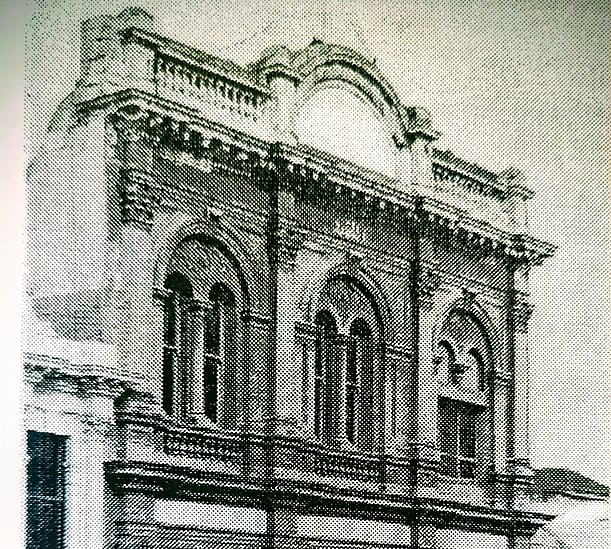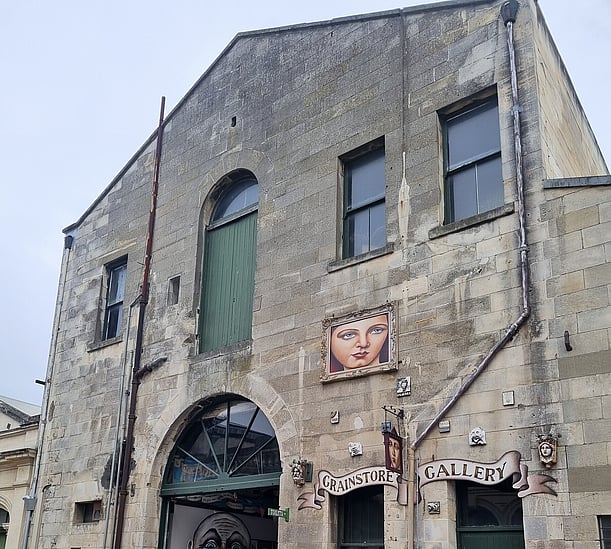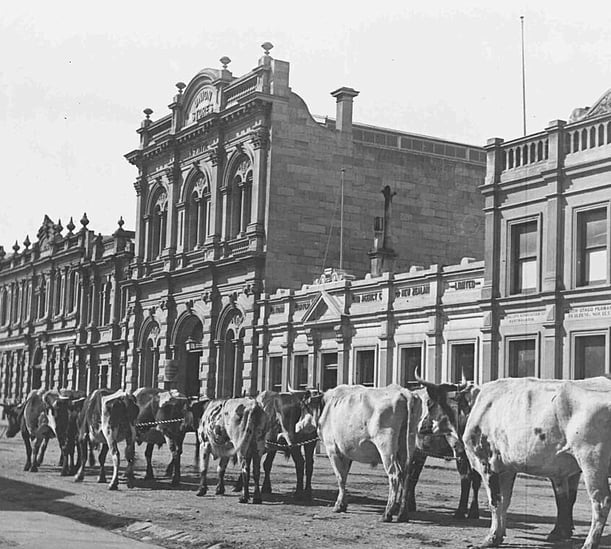
Smiths GrainstoreTyne Street 1890's
Smith's Grain Store
9 Tyne Street
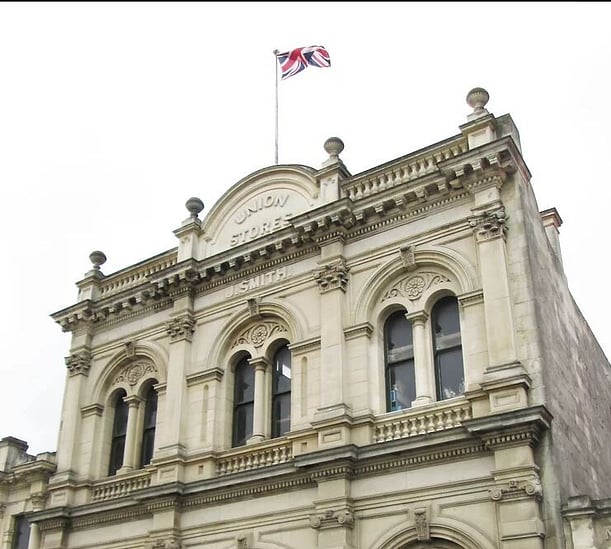
Smith’s Union Grain Store sits within Oamaru’s heritage precinct and was described, at the time of its opening in March 1882, as resembling a “temple of art rather than a grain store.” It remains a highly distinctive example of Victorian commercial design and is regarded as one of the more elaborate surviving industrial buildings of its era in New Zealand.
The building was conceived by architect James Johnston, a professional rival of the prominent Forrester and Lemon partnership, and constructed by the masonry firm Messrs Hamilton and Co., with carpentry carried out by Henry Francis Sidon. Formed from locally quarried Oamaru stone, it was designed on a large scale with the capacity to hold around 30,000 sacks of grain, reflecting the strength of the region’s agricultural trade in the late nineteenth century.
It was originally developed for Joseph Smith, a merchant involved in buying and trading agricultural produce such as wheat and oats, alongside shipping and commission activities. Smith is believed to have occupied and operated from the building until the closing years of the 1880s, although little else is known about him today.
Over time, the building’s purpose shifted significantly as Oamaru’s economy and community needs changed. In the 1890s and early 1900s, the lower level was used by grain and seed merchant Charles Cooke. In 1906, the property entered a long period of use by the Oamaru Mail, which established offices, printing operations, and production facilities that remained there for more than sixty years until 1970. During this extended period, the building also became a flexible community space, hosting gatherings for the early South Oamaru Presbyterian congregation before the construction of Columba Church, as well as serving at different times as a dance hall, skating rink, the first premises of the North Otago Farmers’ Co-operative, and later a joinery workshop.
From an architectural perspective, the building is notable for its unusually ornate treatment of a utilitarian structure. The Tyne Street elevation is richly articulated with stone detailing, including rusticated pilasters framing arched ground-floor openings and more refined classical detailing above, including Corinthian capitals and extensive carved ornament. By contrast, the Harbour Street side presents a plainer, more functional façade with simpler openings and less decoration, emphasising its service role.
This combination of expressive and restrained façades highlights its original dual purpose and contributes to its prominence within the continuous Victorian streetscape of Tyne Street. Its level of ornamentation is uncommon for a grain store and reinforces its reputation as one of the most decorative industrial buildings of its kind, while also symbolising the historical importance of grain production to North Otago.
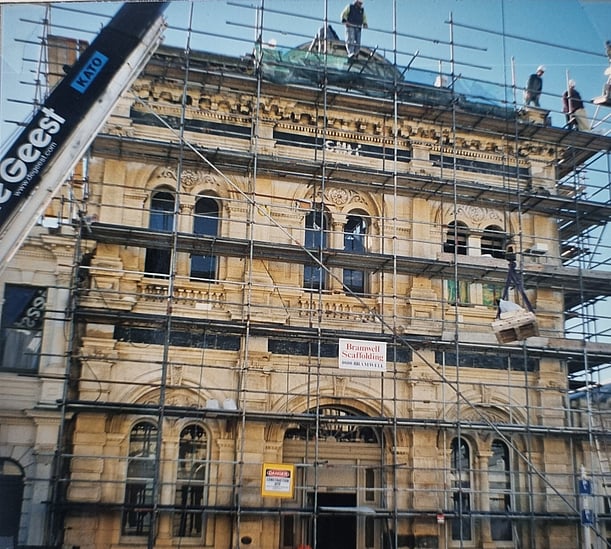
The building was acquired by the Oamaru Whitestone Civic Trust in 1992, which secured its future and undertook restoration work to preserve its significant heritage value.
Trust History
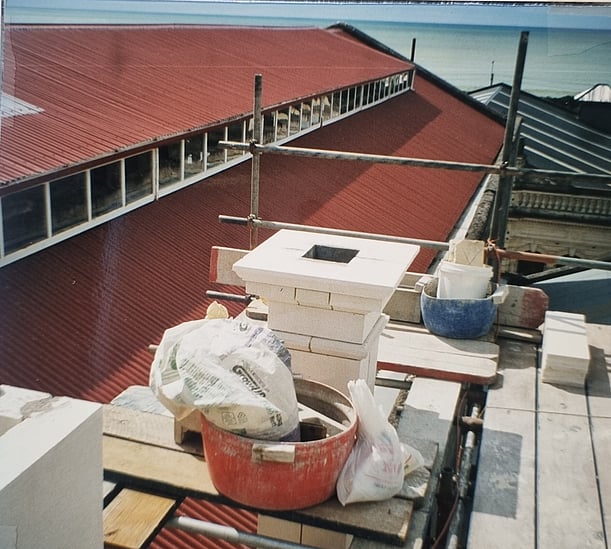
The Trust has undertaken significant large-scale restoration work on the building, including re-roofing, earthquake strengthening, and the careful restoration of the façade to its original design. At the time, the project cost close to $400,000. Today, the building’s ground floor has been repurposed and is actively used for community events, providing a flexible space for local gatherings and activities.
Tenants:
Tyne Street:
Waitaki Whitestone Geopark
New Zealand Whisky Collection Cellar Door
Harbour Street:
Grainstore Gallery